
Adhered Masonry Veneer (AMV): What It Is and the Problems from Improper Installation, which is common!
· Trace Inspections, LLC
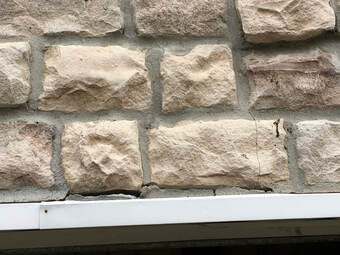
Adhered Masonry Veneer (AMV) is a popular cladding system that gives a home the look of stone or brick without the weight and cost of full masonry. When installed properly, AMV provides long-lasting beauty and protection. But because it relies heavily on correct detailing and workmanship, improper installation is one of the biggest causes of premature failure in these systems.
What Is AMV?
AMV is a lightweight, non-structural veneer made of manufactured stone or thin brick. The units are bonded to the wall using a mortar setting bed applied over a prepared substrate. Unlike traditional brick or stone walls, adhered veneers don’t have their own structural strength—they rely entirely on the bonding system and backing assembly.
AMV is often compared to hard-coat stucco, because both use a base of lath, mortar, and scratch coats applied directly over the wall sheathing. In fact, within the trades AMV is sometimes called “bumpy stucco” because of its textured appearance once the stone or brick veneer units are set into place.
The system usually consists of:
- Weather-Resistant Barrier (WRB) – Protects the sheathing from water intrusion.
- Metal Lath – Provides a mechanical key for mortar adhesion.
- Scratch Coat – Base mortar layer that reinforces bonding.
- Setting Mortar – Holds the masonry units in place.
- Grout/Pointing – Fills joints and seals against water penetration.
Common Problems with Improper Installation
- Missing or Inadequate WRB : Without a properly lapped and sealed WRB, water that penetrates the veneer can reach sheathing and framing, causing rot and mold.
- No Drainage Plane or Weep System: AMV, like stucco, is not waterproof. It must be installed with a drainage path (such as weep screeds at the base). Without this, trapped water can damage the wall assembly.
- Improper Lath Installation: Incorrect fastener spacing, missing overlaps, or lath in direct contact with sheathing can compromise mortar bond and lead to veneer detachment.
- Thin or Incomplete Scratch Coat: A weak scratch coat reduces adhesion and increases the chance of units pulling away from the wall.
- Mortar Coverage Issues: Units must have full mortar contact on the back; “spot bonding” leaves voids where water collects and freeze-thaw damage occurs.
- Improper Clearances: Veneer should not be installed tight to grade, paving, or rooflines. Without clearance, water wicks upward into the wall system.
Why These Problems Matter!
Improperly installed AMV can lead to:
- Veneer pieces are cracking or falling away from the wall.
- Water intrusion leading to hidden wood rot or mold.
- Freeze-thaw damage to both veneer and mortar.
- Expensive remediation, often requiring full removal and replacement.
Code Requirements & Best Practices:
When it comes to adhered masonry veneer, the building codes are clear: this system must be installed according to strict standards.
Both the International Residential Code (IRC) and the International Building Code (IBC) reference ASTM C1780 – Standard Practice for Installation of Adhered Manufactured Stone Masonry Veneer.
This isn’t just a guideline—it’s the industry standard that ensures AMV systems perform as intended.
ASTM C1780 and the codes require:
- ✅ Weather-Resistant Barriers (WRB): In many climates, a minimum of two layers of WRB are required behind the veneer. This is critical to protect the sheathing.
- ✅ Weep Screeds and Drainage Details: AMV is not waterproof. The system must include weep screeds at the base and other provisions to allow trapped water to drain.
- ✅ Proper Metal Lath & Fasteners: Lath must be installed with correct overlaps, spacing, and fastening to create a strong substrate for the mortar.
- ✅ Scratch Coat Requirements: A continuous scratch coat must fully embed the lath to create a durable bonding surface.
- ✅ Clearances: Veneer must not be run tight to grade, paving, or rooflines. Proper clearance prevents water wicking into the wall system.
In Middle Tennessee, local building officials typically enforce these provisions, but field shortcuts are common. At Trace Inspections, we often find AMV installations that do not meet ASTM or code requirements, leading to premature failure and costly repairs.
Why Choose Trace Inspections
Trace Inspections is one of the few companies in Middle Tennessee with inspectors specifically qualified to evaluate AMV (Adhered Masonry Veneer), Stucco, and EIFS systems. Our experience allows us to identify subtle installation defects that many general inspectors miss. Because of our expertise, we are often called to inspect these systems not only in Tennessee, but also in Kentucky, Mississippi, and other surrounding states for clients who want trusted, knowledgeable eyes on their property.
When to Call for an Inspection
If you see cracks, missing mortar, staining, or veneer units pulling away from your home—or if you’re unsure whether your veneer was installed to code—an inspection is recommended.
Trace Inspections Can Help
At Trace Inspections, we know the details that make or break AMV systems. A thorough inspection can save you thousands in repairs by catching installation errors early.
Trace Inspections – Spring Hill, TN
📞 615-302-1113
🌐 TraceInspections.com
Buying, selling or have a question about your home?